About
I enjoy working at the intersection of AI, industrial systems, and capital allocation, where the underlying frameworks rarely converge but the consequences are real. I focus on problems where technical depth, operations, and capital constraints collide. I am drawn to systems that can fail in non-obvious ways: large-scale AI models deployed into safety-critical environments, supply chains that depend on a narrow set of minerals or jurisdictions, and businesses where capital is committed long before the risks are fully understood. My work is about making those systems more observable, resilient, and defensible.
What got me here
- Neural networks in acoustics: early research on how models learn structure from noisy sensor data.
- Automotive systems: led global product development and manufacturing programs under tight safety, cost, and reliability constraints.
- Investment banking and private equity: saw how capital decisions get made when information is incomplete and risks are asymmetric.
- CEO/COO roles in critical minerals recycling and refinery-scale advanced manufacturing: built plants and teams to solve hard technical problems under real operational and capital constraints.
- MIT (current): staying close to what is actually emerging in machine learning.
I have authored patents in automotive acoustics and electric vehicle battery recycling. I have led through restructuring, raised capital, and built technical teams that shipped products into production environments. Those experiences shape how I think about risk, resilience, and where leverage really sits in a system.
What I am focused on now
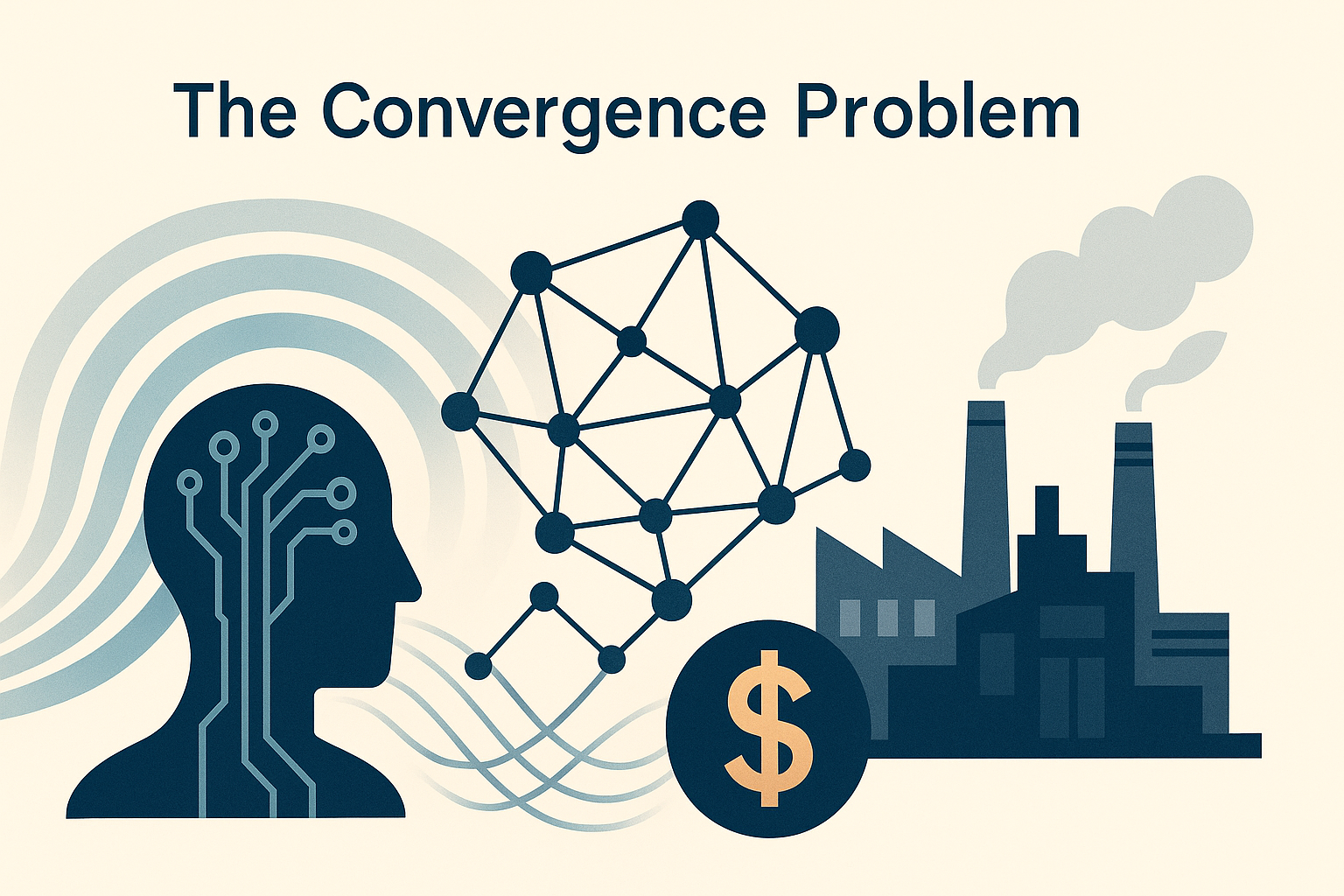
AI systems are advancing quickly, but we still do not fully understand how neural network weights encode behavior, how decision boundaries form, or how these systems fail under adversarial conditions. At the same time, AI compute demand is stressing semiconductor supply chains that depend on a small set of critical minerals and geopolitical choices. Leadership teams are being asked to make multi-billion-dollar decisions inside that uncertainty. That is the convergence problem.
- How neural networks fail under adversarial and distributional shift, and why current safety and security models often miss those risks.
- Where defensibility actually sits in critical minerals and advanced manufacturing, and when vertical integration is the only credible strategy.
- How to evaluate deep-tech companies beyond surface metrics and narratives, using a systems and capital-allocation lens.
- How leaders close the gap between technical truth, operational reality, and the stories they tell boards, regulators, and markets.
If you are building or investing in any of these areas and want a blunt, systems-level view of the risks and opportunities, reach out 💬.